


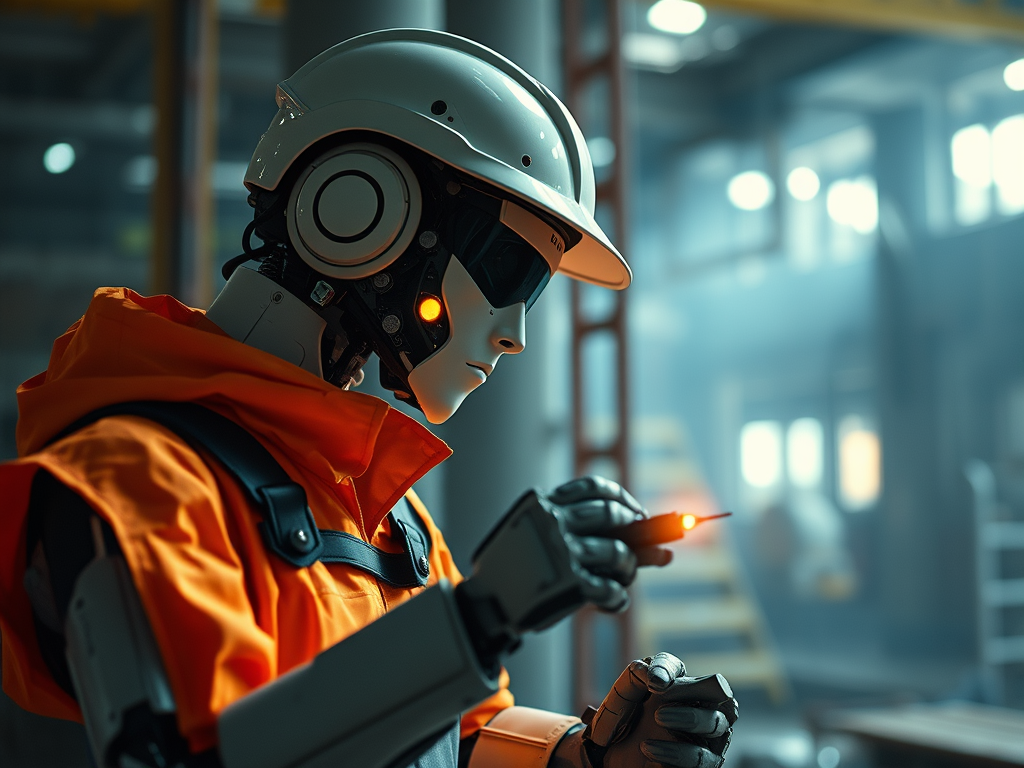
Much of the opinion on how AI will change human work is polarizing: AI will either create a paradise where we’re all relaxing with our newfound time and wealth or it will cause the rapid downfall of civilization and kill us all. To me, the result of changing in the division of human/AI labor will be much more gradual, but will cause monumental shifts in education, work, recreation, and how we meatbags spend our time. In this article, I want to explore a few obvious shifts, the second and third-level effects, and finally a prediction that we’ll see the TikTok-style “Snakeoilification” of entry-level work.

One of the most common predictions is that AI will replace construction, manufacturing, and agriculture jobs. I think that the combination of semi-manual labor and how much technology has changed these industries make these sectors an easy target. Some examples:
Let’s then look at the 2nd and 3rd level effects that could result from AI taking over these jobs,


Right after manual labor is retail, and the lowest paid, lowest margin industries are always looking to cut costs and have lower turnover.

Moving down the “perception of humanness” continuum of work, we can then look at support staff in the professions. Administrative roles. Again, these are roles that perform similar, repeated tasks that are often entirely computer-based.
Some examples:

This is where it gets into the argument about whether AI can create art, and whether the “creative” industries will really only be dominated by us humans. I think there’s something uniquely human about saying “only people can do this”, but let’s put that aside and look at a few potential effects.

That might be the longest preamble I’ve ever written to get to my main point. Sorry. I actually cut some fluff…really…there was even more before! Here’s the main point:
For hundreds of years, we humans have accepted an apprentice system whereby the “expert” is willing to exchange mentorship and guidance for cheap labor. The entry-level worker is willing to dedicate time and effort above and beyond what they’re getting paid in order to get experience and learn from the professional. From unpaid internships to “individual contributor” roles, this exchange is seen as normal and sometimes necessary – especially in highly competitive, highly-compensated roles.
But what happens when the expert can replace cheap labor with free, AI-based assistants?
This will be a topic for an entire post, but here’s a teaser:
We’re already seeing a large shift where people sell “fast track” techniques to success, like courses on drop shipping, increasing followers to become influencers, affiliate marketing, and so on. These creators capitalize on people’s wish to bypass traditional pathways by promoting “passive income” strategies that avoid climbing a corporate ladder or gaining gradual experience.

This shows a type of meta-market where knowledge about how to hack or game the system becomes the product itself. These “inside secrets” essentially offer a promise of bypassing traditional expertise in favor of quick success. This shift also contributes to the gig economy and creator economy, where many people attempt to leverage platforms for short-term gains, often without building long-term skills or relationships, which might have historically come from working under an experienced mentor or within a structured organization.
In this way, the “apprentice effect” is not just hypothetical—it’s already happening, and we’re seeing people try to capitalize on this trend by selling courses on shortcuts to success. These new pathways raise concerns about sustainability and depth of expertise, but they reflect how individuals are adjusting to the changing landscape of work.
In other words, if you roll your eyes every time you see an ad touting a new “proven method” to gaining followers, creating a YouTube channel that pays $50k per month, or teaching you to sell a course, get ready…..your eyes are going to be bleeding soon.

Took Maggie to Boardwalk Beach in Sandwich for some last day of summer photos!

As artificial intelligence (AI) and machine learning (ML) continue to revolutionize the field of cybersecurity, it’s crucial to understand the evolving roles of humans and machines in this domain. While AI can handle many tasks with unprecedented speed and accuracy, there remains a vital space for human expertise. This article explores the division of responsibilities between humans and AI, highlighting what each is best suited for and how cybersecurity professionals can adapt to this changing landscape. It’s the first in a sort of “thinking out loud” articles looking at what I think is an inevitable future.

AI and ML excel in tasks that require the rapid processing of large amounts of data, identifying patterns, and reacting in real-time to threats. These technologies are particularly effective in:
1. Threat Detection and Response: AI systems can monitor network traffic, analyze vast amounts of data, and recognize patterns that may indicate a cyber threat far faster than any human could. For example, AI can identify anomalies in behavior or detect new types of malware by recognizing subtle patterns that would be invisible to the human eye.
2. Automated Incident Response: In situations where speed is crucial, like when containing a ransomware attack, AI can automate responses to mitigate damage. Automated systems can isolate infected devices or block malicious traffic almost instantaneously, actions that might take a human operator minutes or even hours to execute.
3. Predictive Analytics: By analyzing historical data, AI can predict potential future attacks and help organizations to preemptively strengthen their defenses. This predictive capability is essential in a landscape where new threats emerge constantly, and staying ahead of adversaries is key.

One of the most significant challenges in modern cybersecurity is the speed at which adversaries, often empowered by AI themselves, operate. Cybercriminals are leveraging AI to launch sophisticated attacks at a pace that is simply incompatible with human response times. For instance, AI-driven phishing campaigns can target millions of users simultaneously, adapting their strategies based on real-time data, making it nearly impossible for humans to keep up without assistance. A few resources:
As these threats become more advanced, the role of AI in defense becomes not just beneficial but necessary. While AI can manage and respond to these threats quickly, it still requires human oversight to make sure that responses are appropriate and ethical.
Despite AI’s capabilities, there are areas where human skills are (at least currently) irreplaceable:
1. Strategic Decision-Making: AI can provide data and even suggest actions, but humans are better at making complex decisions that consider context, ethics, and long-term consequences. For example, deciding how to respond to a sophisticated attack might require an understanding of the geopolitical implications that AI lacks.
2. Creativity and Problem-Solving: While AI excels at pattern recognition, it struggles with out-of-the-box thinking. Humans can devise creative solutions to new problems, such as developing innovative cybersecurity strategies or creating novel defenses that an AI might not be programmed to consider.
3. Understanding Human Behavior: Cybersecurity is not just about technology but also about people. Humans are better at understanding and anticipating how other humans behave, which is crucial in areas like social engineering defense and insider threat detection.
Note: The notion that there are things that AI can’t replace is an interesting topic, and something worthy of an entire article challenging whether these three examples are truly impossible for AI to dominate.

As AI takes over routine and time-consuming tasks, cybersecurity professionals have the opportunity to focus on more strategic and creative work. This shift is not unlike what has happened in other industries over time. For example:
• Manufacturing: Automation and machinery took over repetitive tasks on the production line, allowing workers to move into roles that required more oversight, quality control, and innovation.
• Agriculture: The introduction of industrial equipment reduced the need for manual labor, enabling farmers to focus on crop management, sustainability practices, and business expansion.
In cybersecurity, professionals can now dedicate more time to:
• Developing Security Policies and Frameworks: With AI handling real-time threats, humans can focus on creating and refining security policies that address broader organizational goals and compliance requirements.
• Conducting Advanced Threat Research: Freed from routine monitoring, security experts can delve into researching emerging threats, studying the latest attack vectors, and developing new defense techniques.
• Training and Awareness: Human experts can invest more time in educating employees and users about security best practices, an area where human interaction is essential.

As AI takes on a more significant role in cybersecurity, it’s crucial to rethink how we train and educate entry-level cybersecurity professionals. The traditional curriculum, which often focuses on manual processes and basic technical tasks, must evolve to prepare new professionals for a world where AI is a critical component of the cybersecurity toolkit. While it’s still important to train cybersecurity professionals on the fundamentals, it’s worth revisiting the reality of the new co-pilot or AI collaboration model of day-to-day cyber work.
A typical entry-level cybersecurity curriculum includes courses on network security, incident response, ethical hacking, and cybersecurity fundamentals. For example, a program like the Certified Information Systems Security Professional (CISSP) or CompTIA Security+ certification includes topics like:
• Network and Host-Based Security: Configuring and managing firewalls, intrusion detection systems, and antivirus software.
• Incident Response: Identifying, analyzing, and mitigating cybersecurity incidents manually.
• Ethical Hacking: Learning to use manual penetration testing tools to identify vulnerabilities.
While these skills are foundational, many of the tasks involved can now be performed more efficiently by AI. Therefore, the curriculum needs to pivot to ensure that entry-level professionals are not just equipped to work alongside AI but can leverage it effectively as a “cybersecurity co-pilot.” Again, this isn’t to suggest we ditch the basics and let people simply rely on AI without understanding the core concepts. Instead, there must be a balance.
Here’s how we can adapt the existing curriculum to incorporate AI:
1. AI-Driven Security Tools:
• Current Curriculum: Manual use of firewalls, IDS, and antivirus software.
• Updated Curriculum: Training on AI-driven security platforms like those from Palo Alto Networks, CrowdStrike’s Charlotte AI, or IBM’s AI-driven threat detection tools. Students should learn how to configure, monitor, and interpret the outputs of these AI tools, understanding how AI makes decisions and how to intervene when necessary.
2. AI-Augmented Incident Response:
• Current Curriculum: Manual identification and response to security incidents.
• Updated Curriculum: Focus on AI-based incident response automation. Students should be trained to work with AI systems that automatically detect, analyze, and respond to incidents. They should understand how to use these systems, how to review AI-driven decisions, and how to escalate or modify responses when human judgment is required.
3. AI in Ethical Hacking:
• Current Curriculum: Learning manual penetration testing techniques.
• Updated Curriculum: Introduction to AI-powered penetration testing tools that can automate the discovery of vulnerabilities. Students should be trained on how to interpret the results from these tools, validate findings, and understand where AI can fall short, requiring human intuition and creativity.
4. Understanding AI Ethics and Governance:
• New Addition: Introduce courses that cover the ethics and governance of AI in cybersecurity. As AI systems make decisions that affect security, understanding the ethical implications of AI deployment and the biases that may be present in AI algorithms becomes critical.
5. Collaborative Problem Solving:
• New Addition: Develop courses that emphasize collaboration between human and AI teams. This includes case studies where students must determine when to trust AI, when to intervene, and how to work in tandem with AI to solve complex security challenges.

As AI handles more routine and technical tasks, entry-level cybersecurity professionals should be encouraged to develop soft skills and strategic thinking. This includes:
• Communication Skills: Explaining complex AI-driven decisions to non-technical stakeholders.
• Strategic Planning: Understanding the broader implications of AI in security and how to align AI strategies with business objectives.
• Continuous Learning: As AI evolves, professionals must stay updated on the latest technologies, tools, and ethical standards.
The pivot to a collaborative model between humans and AI in cybersecurity necessitates a corresponding shift in how we train the next generation of professionals. By updating curricula to emphasize AI tools, strategic thinking, and ethical considerations, we can ensure that entry-level professionals are well-prepared to thrive in a landscape where AI is a central player in cybersecurity defense. This approach not only equips them with the necessary technical skills but also empowers them to take on more strategic roles, driving innovation and enhancing the overall security posture of organizations.

In a world where AI is increasingly capable of handling many cybersecurity tasks, the role of the human evolves rather than diminishes. While AI excels at speed, pattern recognition, and automation, humans remain essential for strategic decision-making, creativity, and understanding human behavior. As AI takes over more routine tasks, cybersecurity professionals can focus on higher-level responsibilities that require human insight, ensuring that they continue to play a crucial role in protecting organizations from evolving cyber threats.
Note: This article was written in collaboration with ChatGPT and WordPress. I used ChatGPT to create the initial outline based on the prompt:
What is the role of the human in a world where AI can handle many of the tasks needed in cybersecurity? Help me write an outline for an article about what people should do vs. what AI should be responsible for and include the following:
1. What cybersecurity tasks are obviously better suited for AI/ML based on things like speed and pattern recognition
2. The idea that adversaries are taking advantage of AI/ML and will continue operating at a speed incompatible with human capacity
3. What humans will be better at than AI/ML
4. What people can do if they're not spending time on the types of tasks that will be taken over by AI - here please give examples of work that humans did in the past, but innovation in automation, machinery, industrial equipment etc. meant that people could instead do more strategic work
5. How we should adapt our approach to training and educating entry-level cybersecurity professionals given this pivot to a collaborative model between humans and AI.
Additionally, every image in the post was generated using the default “create image with AI” feature within WordPress.

Photos from Omega Mart
Omega Mart in Las Vegas is an immersive, interactive art installation created by the art collective Meow Wolf. Introduced in February 2021, Omega Mart is designed as a surreal supermarket, blending elements of science fiction, fantasy, and art. Visitors explore aisles filled with bizarre, whimsical products, but the experience quickly evolves into a deeper narrative-driven adventure as they uncover hidden portals and secret passages leading to otherworldly environments.
The installation is praised for its creativity and the high level of interactivity it offers. Visitors often describe it as a mind-bending experience that challenges perceptions of reality. Many consider it one of the most unique attractions in Las Vegas, offering something entirely different from the typical entertainment options in the city.
Photos from Speed Las Vegas
Speed Vegas is a premier motorsports experience located just minutes from the Las Vegas Strip, offering adrenaline-pumping opportunities for thrill-seekers and car enthusiasts alike. Introduced in 2016, Speed Vegas allows visitors to get behind the wheel of some of the world’s most powerful supercars, including Ferraris, Lamborghinis, and Porsches, and race them on a professionally designed, 1.5-mile road course. The track features 12 challenging turns, sweeping banked corners, and a half-mile straightaway where drivers can push their vehicles to top speeds.
The facility has received widespread acclaim for its well-maintained vehicles, professional instructors, and the exhilarating experience it provides. Visitors often describe it as a must-do in Las Vegas, offering a unique blend of luxury, speed, and the excitement of high-performance driving. Whether you’re a seasoned driver or a first-timer, Speed Vegas is celebrated as an unforgettable adventure that lets you live out your racing dreams in a safe and controlled environment.

Cybersecurity is often an afterthought for startups focused on growth, product development, and securing funding. However, the cost of ignoring cybersecurity can be catastrophic, especially in a world where data breaches and cyberattacks can take down even the largest companies. As a startup founder or executive, you don’t need an army of security professionals to protect your business—you just need the right strategy.
This guide provides a clear, step-by-step approach to building a robust cybersecurity strategy from scratch that grows with your company.
Before diving into specific tools or policies, it’s crucial to first understand the risks specific to your startup. Different industries and business models have varying security concerns. A SaaS platform handling sensitive customer data will have different risks than an e-commerce company, for example.
Key Questions to Ask:
By answering these questions, you can assess the potential impact and likelihood of a cyber incident, allowing you to prioritize which areas of cybersecurity to focus on first.
Security is not just an IT issue—it should be embedded into your startup’s culture from day one. Building this culture early on will ensure that all employees, regardless of their role, are aligned with the company’s security goals.
Actionable Tips:
You don’t need to hire a full-time CISO or invest in expensive security tools right away. Start by implementing basic cybersecurity best practices that can drastically reduce your risk.
Security Basics for Startups:
Suggested Tools:
Your startup might not have many resources to secure everything equally, so you need to prioritize protecting the assets that matter most. These could include customer data, proprietary code, intellectual property, or key infrastructure.
Steps to Secure Critical Assets:
Suggested Tools:
Startups are often targeted by cybercriminals looking to exploit weak points. Understanding the most common attack vectors will help you defend against them.
Top Threats to Startups:
Key Defenses:
Suggested Tools:
No matter how well-prepared your startup is, incidents can still happen. Having an incident response plan ensures that your team can act swiftly and minimize the damage.
Key Elements of an Incident Response Plan:
Suggested Tools:
As your startup grows, so will your attack surface. Security should scale alongside your business, so it’s important to invest in tools and processes that can grow with you.
Scalable Security Practices:
Suggested Tools:
Building a cybersecurity strategy for your startup doesn’t need to be overwhelming. By focusing on the basics and implementing scalable security practices, you can create a strong foundation that grows with your company. Cybersecurity should be viewed as an ongoing process—not a one-time project. With the right mindset, tools, and a proactive approach, your startup can stay secure and resilient in today’s dynamic threat landscape.
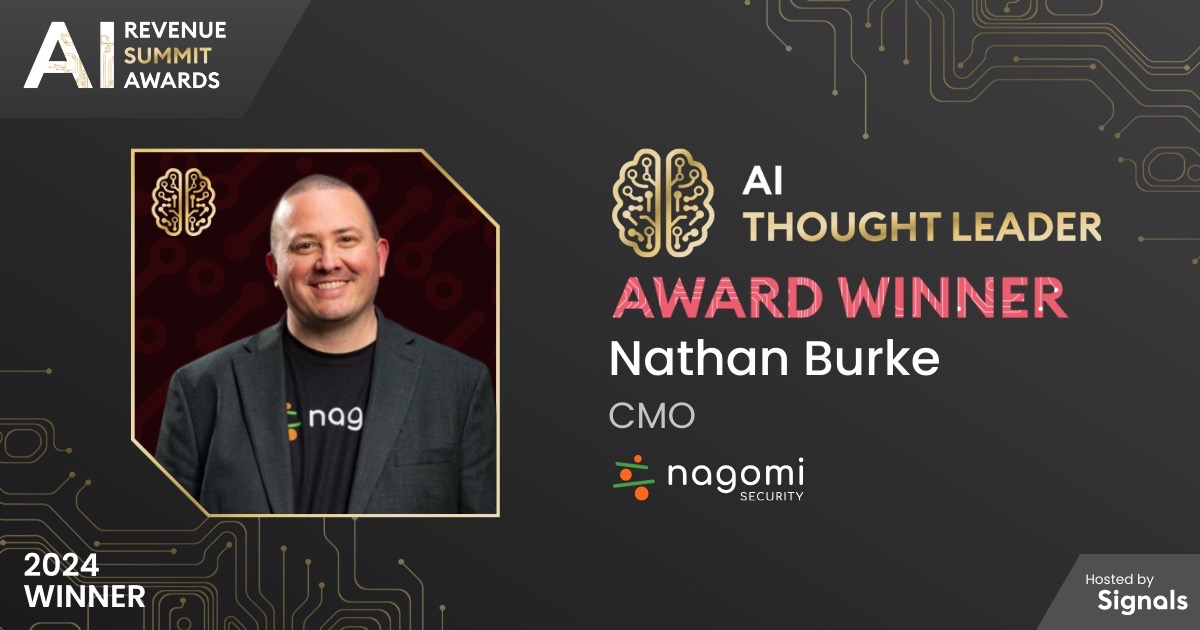
I’m incredibly honored to have been recognized as an AI Thought Leader at the AI Revenue Summit, an event that brings together the brightest minds in the AI and tech industries. This award signifies a pivotal moment for me, marking the beginning of a new chapter where I’ll be sharing my thoughts on the future of AI—particularly its impact on the field of cybersecurity.
What is the AI Thought Leader Award?
The AI Thought Leader Award is designed to recognize individuals who are making significant strides in advancing AI technologies and solutions. At the AI Revenue Summit, leaders across industries were selected for their contributions to AI innovation and thought leadership. The judging panel considered not only technical expertise but also the ability to communicate complex AI concepts in ways that help companies understand their real-world impact.
It’s not just about being an expert in AI but about creating a vision for how AI can transform industries, improve workflows, and solve previously insurmountable challenges. Winners are chosen based on their impact in the AI community, their influence on industry peers, and their potential to drive change in how AI is used in business and technology.
Why This Matters to Me
This recognition is both exciting and humbling. I’ve always believed that AI has the potential to reshape cybersecurity, offering us new tools to automate repetitive tasks, detect threats faster, and reduce human error. However, like many emerging technologies, the real challenge lies in integrating AI in ways that don’t diminish the human element but rather enhance it.
Cybersecurity, in particular, stands at the intersection of AI and human expertise. As I start to dive deeper into the subject, I’ll be sharing insights on how AI can play a pivotal role in incident response, anomaly detection, and workflow automation—areas where speed and precision are critical. But more importantly, I’ll explore how these technologies can free up our talented security professionals to focus on strategic thinking and creative problem-solving, areas where humans still reign supreme.
What’s Next?
Over the coming months, I’ll be posting more regularly on NathanWBurke.com about AI’s role in cybersecurity, what organizations can do to adopt these technologies effectively, and how we can maintain a strong partnership between AI and human-driven work. This award has given me the encouragement to share my vision more openly and foster discussions around how we can build a future where AI is a trusted ally in securing our organizations.
Note: This post was written entirely by ChatGPT.


